No products in the cart.

blog
UK Driving Licence Categories Explained: What Vehicles Can You Legally Drive?
27
Jul
Jul
UK Driving Licence Categories Explained: What Vehicles Can You Legally Drive?
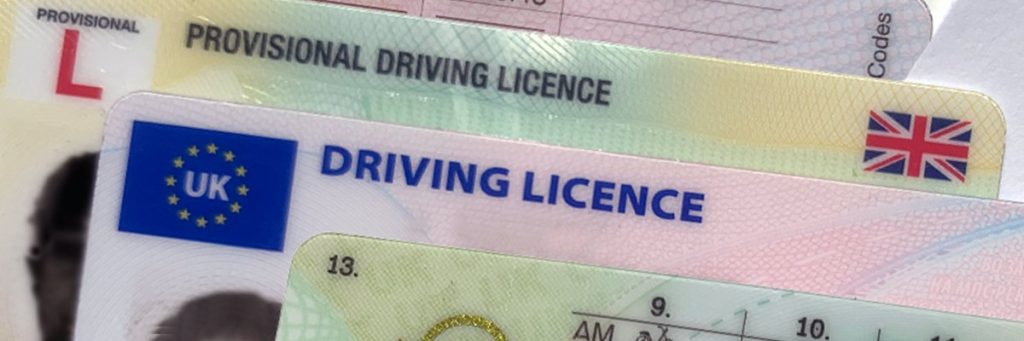
Flipping over your photocard reveals a dense table of letters, numbers, and pictograms. Understanding these UK driving licence categories is essential if you want to stay completely legal on the road. Drive a vehicle without the correct category listed on your card, and you risk points, heavy fines, or voided insurance.
Whether you are a professional driver, a student buying your first car, or a motorist looking to tow a trailer, your photocard dictates your exact legal limits. Consequently, knowing what each code stands for saves you from costly legal blunders.
This comprehensive guide breaks down every single category on your photocard, explaining weights, codes, and legal requirements clearly.
What Are UK Driving Licence Categories?
The Driver and Vehicle Licensing Agency (DVLA) uses specific letter combinations to categorize vehicles based on weight, power output, and seating capacity.
Why the DVLA Uses Category Codes
Vehicle safety requires distinct skill sets. Driving a two-seater hatchback differs massively from operating a 44-tonne articulated lorry or a double-decker bus. Therefore, the DVLA categorizes licenses to ensure drivers undergo proper training for heavier or more complex vehicles.
Where to Find Your Entitlements
Take out your photocard and flip it over to the reverse side. Column 9 lists the primary UK driving licence categories you hold. Meanwhile, Column 10 details the valid start date, Column 11 shows the expiry date, and Column 12 contains specific restriction codes.
Category B: Standard Car Driving Licence Rules
Category B represents the most common authorization held across Great Britain. However, the exact rules depend heavily on when you passed your driving test.
       ┌──────────────────────────────────────────────────────────┐
       │   WHEN DID YOU PASS YOUR CATEGORY B DRIVING TEST?        │
       └────────────────────────────┬─────────────────────────────┘
                                    │
            ┌───────────────────────┴───────────────────────┐
            ▼                                               ▼
   BEFORE 1 JANUARY 1997                           AFTER 1 JANUARY 1997
┌───────────────────────┐                       ┌───────────────────────┐
│ • Drive up to 8,250kg │                       │ • Drive up to 3,500kg │
│   MAM (car + trailer) │                       │   MAM maximum weight  │
│ • Automatic B+E towing│                       │ • Tow up to 3,500kg   │
│   rights included     │                       │   trailer (MAM limit) │
└───────────────────────┘                       └───────────────────────┘
Passing Your Test After 1 January 1997
If you passed after this date, your standard Category B allows you to drive cars up to 3,500kg Maximum Authorised Mass (MAM). You can carry up to eight passenger seats in addition to the driver’s seat.
Furthermore, legal updates in late 2021 changed trailer rules significantly. Drivers with a Category B entitlement can now tow a trailer up to 3,500kg MAM without taking an extra test.
Passing Your Test Before 1 January 1997
Drivers who passed before 1997 enjoy broader automatic entitlements under older grandfather rights. Consequently, you can usually drive vehicle and trailer combinations weighing up to 8,250kg MAM. You can verify your exact entitlement limits on the GOV.UK driving entitlement checker.
Category B Automatic (Code 78)
If you pass your driving test in an automatic car, your photocard displays restriction code 78 alongside Category B. Consequently, you are legally restricted to driving automatic cars. To drive a manual vehicle, you must retake and pass the practical test in a manual car.
Small Vehicles and Quadracycles: Categories AM, P, Q, and B1
Before upgrading to full passenger cars, many young drivers start on smaller, lightweight road transport options.
Category AM, P, and Q: Mopeds and Light Vehicles
These basic categories govern two- and three-wheeled vehicles with smaller engine sizes:
Category AM: Covers two- or three-wheeled vehicles with a maximum design speed between 25km/h and 45km/h. It also includes light quadricycles.
Category P: An older UK category for two-wheeled mopeds with a maximum engine speed of 50km/h and engine size under 50cc.
Category Q: Covers two-wheeled vehicles with an engine size under 50cc and a top speed capped at 25km/h.
Category B1: Light Lightweight Vehicles
Category B1 allows you to drive motor vehicles with four wheels up to 400kg unladen weight, or 550kg if the vehicle is designed for carrying goods. This category often applies to small utility vehicles and specialized invalid carriages.
Motorbikes and Mopeds: Categories A, A1, and A2
Riding a motorcycle involves a progressive access system based on age, experience, and engine power outputs.
Category A1: Small Motorcycles
Category A1 allows riders aged 17 and older to operate light motorcycles. These bikes are limited to an engine capacity of up to 125cc, a power output up to 11kW, and a power-to-weight ratio not exceeding 0.1kW/kg.
Category A2: Medium Motorcycles
Once you reach 19 years of age, you can upgrade to Category A2. This classification allows you to ride bikes with a power output up to 35kW. However, the bike must not be derived from a vehicle testing at more than double its power output.
Category A: Full Unrestricted Motorcycles
Category A is the top-tier motorcycle authorization. It lets you ride any bike of any engine size or power output. You can achieve this at age 24 via Direct Access, or at age 21 if you have held an A2 licence for at least two years.
Medium and Large Goods Vehicles: Categories C1, C1+E, C, and C+E
Commercial transportation and logistics rely heavily on the C categories. These govern heavy goods vehicles (HGVs) and lorries.
+---------------+--------------------------------+----------------------------+
| Category Code | Vehicle Description            | Maximum Weight Limit (MAM) |
+---------------+--------------------------------+----------------------------+
| Category C1   | Medium-sized goods vehicles    | Between 3,500kg & 7,500kg  |
| Category C1+E | Medium vehicles with trailers  | Combined total up to 12t   |
| Category C    | Rigid Large Goods Vehicles     | Over 3,500kg (No upper)   |
| Category C+E  | Articulated Lorries / Drawbars | Trailers over 750kg MAM    |
+---------------+--------------------------------+----------------------------+
Category C1 and C1+E: Medium-Sized Vans and Trucks
Category C1 permits you to drive vehicles weighing between 3,500kg and 7,500kg MAM. You can also tow a trailer up to 750kg. If you need to tow a heavier trailer, you need Category C1+E, which allows a combined vehicle and trailer weight up to 12,000kg.
Category C and C+E: Heavy Goods Vehicles (HGVs)
Category C allows you to drive rigid vehicles weighing over 3,500kg with a trailer up to 750kg. Meanwhile, Category C+E represents the premier commercial licence, allowing you to operate massive articulated lorries with heavy detachable trailers. Drivers looking to enter logistics can learn more about professional CPC requirements via the Chartered Institute of Logistics and Transport.
Buses and Passenger Transport: Categories D1, D1+E, D, and D+E
If you plan to transport passengers commercially, you must hold a Category D entitlement on your photocard.
Category D1 and D1+E: Minibuses
Category D1 lets you drive minibuses with up to 16 passenger seats and a maximum length of 8 meters. Additionally, Category D1+E allows you to tow a trailer weighing up to 750kg behind your minibus.
Category D and D+E: Full-Sized Buses and Coaches
Category D allows you to operate full-size buses and coaches carrying more than eight passengers. Category D+E adds the legal right to tow a trailer over 750kg behind a full-size passenger coach.
Specialist Vehicles: Categories F, G, H, and K
The DVLA also issues specific codes for specialized agricultural, industrial, and historical transport options.
Category F: Agricultural Tractors
Category F allows you to drive standard agricultural tractors on public roads. Most drivers receive this automatically when passing their Category B test, provided they meet age requirements.
Category G, H, and K: Tracked Vehicles and Mowers
These unique categories cover specific specialized machinery:
Category G: Authorizes you to drive road rollers.
Category H: Covers tracked military and construction vehicles.
Category K: Permits you to drive pedestrian-controlled lawnmowers and electric site vehicles.
Understanding DVLA Information Codes on Column 12
Beyond letter combinations, the back of your card contains small numeric codes in Column 12. These codes indicate specific physical conditions, adaptations, or legal restrictions.
Common Column 12 Codes Explained
Code 01: Corrective lenses required (glasses or contact lenses must be worn while driving).
Code 78: Restricted to vehicles with automatic transmissions.
Code 79 (.05): Restricted to vehicles restricted to specific weight or seating limits.
Code 115: Organ donor designation indicator.
Failing to adhere to Column 12 restrictions invalidates your licence instantly. For example, driving without mandatory corrective lenses under Code 01 can lead to immediate prosecution. You can review all regulations on physical health standards through the NHS Driver Health Guidelines.
How to Add New Categories to Your Licence
Adding higher UK driving licence categories to your existing entitlement requires passing structured tests or completing specialized training schemes.
Step 1: Check Age and Medical Requirements
Higher categories like C or D carry stricter medical fitness standards and higher minimum age limits (often 18 or 21). You must complete a medical exam (Form D4) before applying for provisional entitlements.
Step 2: Apply for Provisional Entitlement
Send your current driving licence along with completed application forms to DVLA, Swansea. You can request official forms online or pick them up from participating Post Office branches.
Step 3: Pass Theory and Practical Tests
Once your provisional entitlement appears on your record, you must pass the relevant theory hazard perception tests. Afterward, you must complete practical training with an accredited provider and pass your driving test.
Frequently Asked Questions (FAQ)
What categories do I automatically get when passing my car test?
When you pass your Category B test, you typically receive automatic entitlements for Categories AM, Q, and F. Depending on your age, you may also gain provisional entitlements for higher categories.
Can I drive a motorhome on a standard Category B licence?
Yes, you can drive any motorhome weighing up to 3,500kg MAM on a standard Category B licence. However, if the motorhome weighs between 3,500kg and 7,500kg, you need a Category C1 entitlement.
What happens if I drive a vehicle category not listed on my licence?
Driving outside your allowed categories means you are driving unlicenced. This illegal act carries penalties up to 6 penalty points, fines up to £1,000, and automatic insurance invalidation.
How long do category entitlements last on a UK driving licence?
Standard Category B photocard entitlements remain valid until age 70, though you must renew your photocard picture every 10 years. However, commercial categories like C and D require regular medical renewals every 5 years after age 45.
Master Your Road Admin with Prime Quality Notes
Understanding UK driving licence categories helps you stay compliant, avoid severe penalties, and broaden your personal or professional driving capabilities. Whether you are upgrading your skills or checking weight limits for a house move, verifying your legal entitlements on your photocard takes only minutes.
Staying organized with practical admin tasks makes everyday life far easier. For more clear guides, educational summaries, and helpful practical tips, explore our complete resource collections at Primequalitynotes.com.

Pingback: Driving in the UK on an EU/EEA Licence: Rules & Exchange
Pingback: Apps theoretische Führerscheinprüfung Deutschland: Testsieger